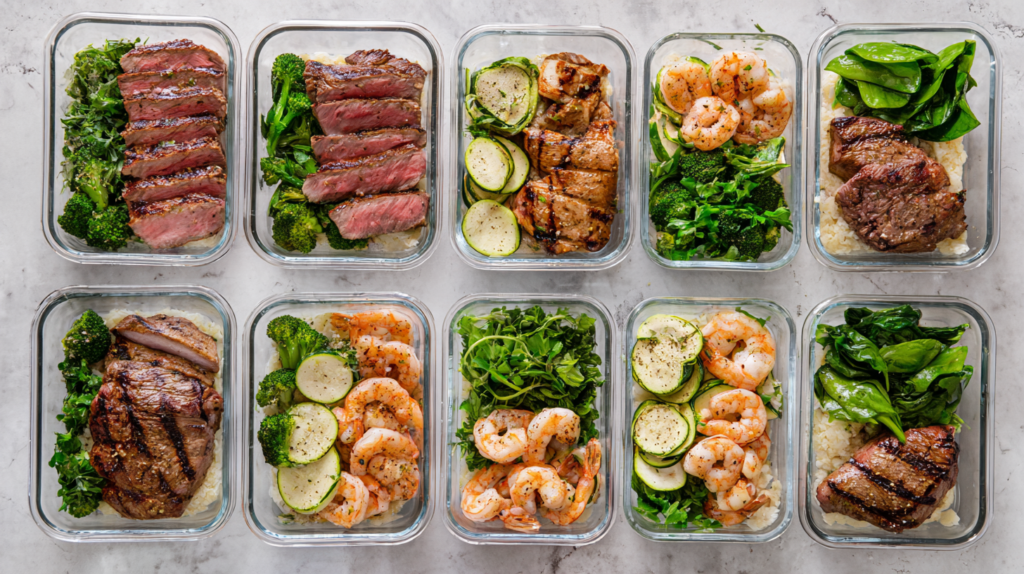
If your weeks tend to run you instead of the other way around, you’re not alone. Between work, family, and the constant mental load of daily life, food decisions are often the first thing to unravel. By the end of the day, deciding what to eat can feel like one more problem to solve.
Meal prepping offers a simple way to bring some calm back into the week. When paired with a high-protein, low-carb approach, it can support not just your physical energy, but your sense of steadiness and control as well.
This isn’t about rigid rules or getting everything “right.” It’s about creating breathing room — fewer decisions, fewer last-minute scrambles, and meals that actually support how you want to feel.
One of the most immediate benefits of meal prepping is the mental relief it provides. When meals are already planned and prepared, you remove the daily question of What am I going to eat? That alone can lower stress more than most people realize. A single prep session — cooking a few proteins and roasting vegetables — can carry you through several days and simplify the entire week.
Meal prepping also makes consistency easier. When time is tight, it’s natural to default to convenience foods or takeout. Having balanced meals ready to go removes that friction. You’re not relying on willpower or motivation — you’re relying on preparation.
A high-protein focus helps you feel full and satisfied longer, while a lower-carb approach can support steadier blood sugar and fewer energy crashes. Instead of the mid-afternoon slump or evening cravings, meals feel more grounding and sustaining.
There’s also alignment that comes from knowing your meals match your intentions. Whether your goal is weight loss, maintaining muscle, or simply feeling better in your body, meal prepping helps bridge the gap between what you plan to do and what actually happens. When food choices are already made, it’s easier to stay on track without feeling restricted.
Meal prepping can also be surprisingly cost-effective. Eating out frequently adds up quickly, while buying ingredients in bulk and portioning meals intentionally helps reduce food waste. Affordable protein options — like eggs, chicken thighs, ground turkey, or canned tuna — can stretch a grocery budget while still supporting your nutrition goals.
What you eat doesn’t just affect your body; it affects your mind. High-protein, low-carb meals can help reduce brain fog and energy swings caused by sugar spikes. Protein supports neurotransmitter function, which plays a role in focus, mood, and mental clarity. Many people notice they feel more even-keeled when their meals are predictable and nourishing.
There’s also confidence that comes from small follow-through. Opening the fridge and seeing prepared meals waiting is a quiet reminder that you showed up for yourself. Those small wins add up, reinforcing trust in your ability to care for your body without extremes or pressure.
Pre-portioning meals helps build awareness around what your body actually needs. When food is already measured and ready, there’s less guesswork and less chance of mindless overeating. It removes the constant negotiation around portions and replaces it with simplicity.
Perhaps one of the most overlooked benefits is how much meal prepping reduces food-related anxiety. On long or stressful days, knowing you already have something prepared takes the pressure off. The decision has been made, and that can feel incredibly calming.
Meal prepping doesn’t have to be repetitive or boring. You can rotate flavors, cuisines, and ingredients while staying within a high-protein, low-carb framework. Simple variations — different seasonings, sauces, or cooking methods — keep meals interesting without adding complexity.
Over time, meal prepping becomes less of a task and more of a rhythm. It’s not a short-term fix, but a habit you can return to when life feels full. The goal isn’t perfection — it’s sustainability.
Getting Started Simply
Choose meals you genuinely enjoy. Focus on a few core proteins paired with low-carb vegetables. Use portion-sized containers to stay organized, and pick one or two consistent days each week to prep. Keep it realistic so it’s something you can maintain.
Final Thoughts
Meal prepping a high-protein, low-carb plan is about more than eating well. It’s about creating stability in a busy life. It saves time, reduces stress, supports your goals, and helps you feel more in control of your week.
You don’t have to overhaul everything at once. One prepared meal at a time is enough.
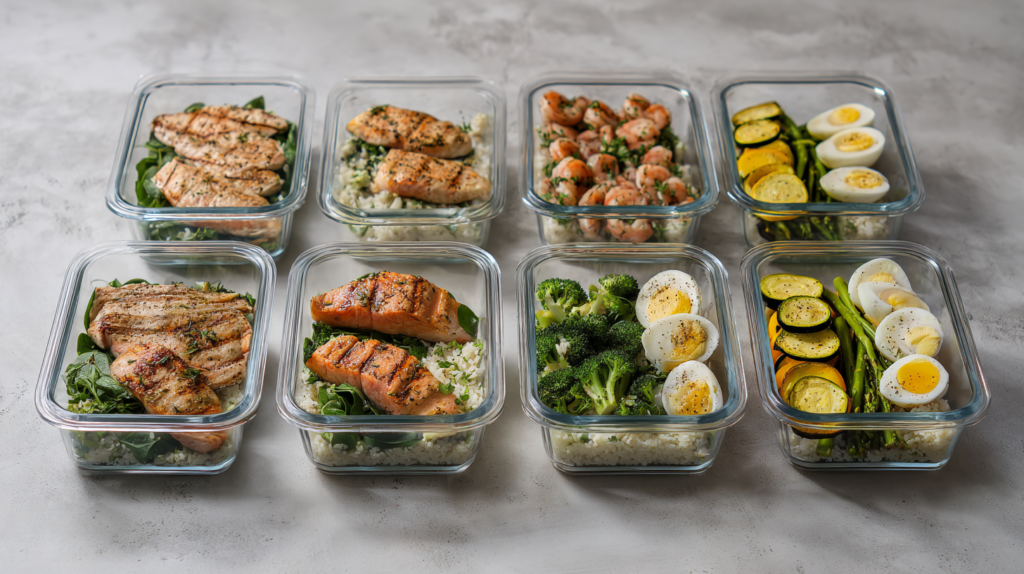
A Simple High-Protein, Low-Carb Meal Prep Formula
You don’t need complicated recipes or a long list of rules. A simple formula is often enough — one that’s flexible, repeatable, and easy to adapt week to week.
Start with a protein as your foundation, such as chicken, fish, eggs, tofu, or turkey.
Add one or two low-carb vegetables you enjoy, like broccoli, spinach, zucchini, or peppers.
Include a healthy fat — olive oil, avocado, nuts, or seeds — to add flavor and help you feel satisfied.
From there, rotate seasonings or simple sauces to keep meals from feeling repetitive.
This approach keeps meal prep straightforward while still giving you variety. You’re not reinventing the wheel every week — you’re building meals that work and adjusting them as needed.